
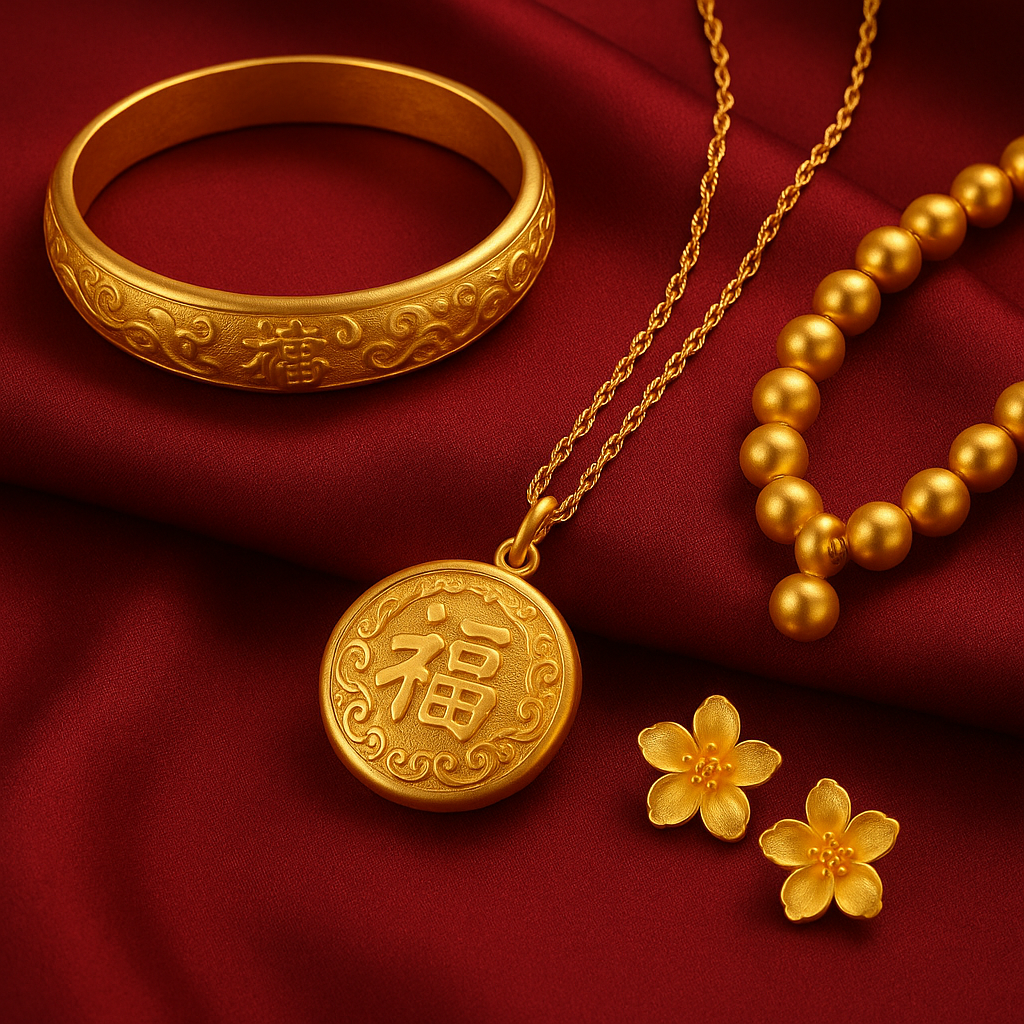
Buy gold in China
For centuries, gold has held a profound place in Chinese culture, symbolizing not just wealth, but also prosperity, good fortune, and enduring tradition. It is woven into the fabric of life’s most significant moments, from weddings to festivals. For the international traveler, this deep-rooted cultural affinity presents a unique opportunity. Beyond the temples and landmarks, China offers a vibrant, world-class market for high-purity gold jewelry. Purchasing a piece of gold here is more than a simple transaction; it is an acquisition of wearable art, a tangible piece of cultural heritage. However, navigating this glittering landscape requires knowledge. This guide provides the essential insights for any foreigner looking to make a confident and rewarding gold purchase in China.
Is Gold Really Cheaper in China? A Price Breakdown
The most common question from travelers is whether gold is cheaper in China. The answer is nuanced. The raw material—gold itself—is a global commodity, and its price, known as the “spot price,” is determined by international markets. This means the intrinsic value of one gram of pure gold is virtually the same in Shanghai as it is in London or New York. The significant cost savings for consumers in China come from other factors in the final price of a piece of jewelry.
The primary advantage lies in the significantly lower labor and craftsmanship fees (known in Chinese as 工艺费, gōngyì fèi). The cost of skilled labor in China’s jewelry manufacturing sector is more competitive than in many Western countries, which translates directly to lower making charges for the consumer. Secondly, particularly in wholesale hubs like Shenzhen’s Shuibei market, many vendors operate on a transparent “spot price + fee” model. This approach strips away the substantial brand premium that is often a major component of the price tag on jewelry from Western luxury houses. Therefore, while a traveler is not getting a discount on the precious metal itself, they are accessing high-quality, intricate craftsmanship at a much lower cost. The value proposition is in the artistry, not in commodity arbitrage.
Understanding What You’re Buying: A Guide to Chinese Gold Purity
A key difference between the Chinese and Western gold markets is the standard of purity. In China, the overwhelming preference is for 24-karat (24K) gold, which is considered pure gold. This is often stamped with markings like “999,” indicating 99.9% purity, or even “9999” (万足金, wàn zú jīn), signifying 99.99% purity. This contrasts sharply with the West, where 18K (75% gold) and 14K (58.3% gold) are far more common for jewelry due to their durability.
This preference creates a “purity paradox” for the uninitiated buyer. While 24K gold boasts a brilliant, rich yellow color and holds the maximum intrinsic value, its purity also makes it extremely soft and malleable. This softness means it is prone to scratching, denting, and deforming with daily wear, making it less suitable for items like rings with delicate settings or pieces worn during strenuous activity. A 24K gold bangle, pendant, or earrings can be a stunning cultural purchase and a store of value. However, for an item like an engagement ring that needs to withstand daily life, a lower karat alloy like 18K or 22K would be a more practical choice. Understanding this trade-off between cultural value and practical durability is crucial to selecting the right piece.
Investment vs. Adornment: Choosing Your Gold
Travelers can approach buying gold in China with two different goals: as an investment vehicle or as personal adornment. Both are well-catered for in the market.
For those focused on investment, China offers unique and highly regarded options. The Chinese Gold Panda is a world-renowned bullion coin produced by the official mint of the People’s Republic of China. A key feature that makes it highly collectible is that its design changes every year, adding numismatic (collector) value on top of its gold content. Gold bars are another option, typically carrying a lower premium over the spot price compared to coins, especially for larger sizes. However, they are generally less liquid, meaning they can be harder to sell quickly than standardized coins.
For most tourists, the appeal lies in jewelry—a wearable asset that combines beauty with value. The market offers an astonishing variety of designs, from intricate traditional motifs like dragons and phoenixes to sleek, contemporary styles. This allows a buyer to find a piece that is not only a store of wealth but also a personal expression and a lasting memento of their travels.
Bringing Your Treasure Home: Navigating Customs for Tourists
A critical final step is understanding the regulations for taking gold out of China and into one’s home country. China’s customs regulations generally permit individuals to carry precious metals for personal use up to a limit of 50 grams without needing to declare them. This typically covers most individual jewelry purchases like necklaces, rings, or bracelets. Anything exceeding this amount must be declared to customs upon exit.
It is imperative for travelers to keep all receipts and certificates of authenticity, as these will be essential for customs clearance both in China and upon arrival back home. Regulations vary significantly from country to country, so it is strongly advised that anyone planning a substantial purchase should research their own country’s import duties and declaration requirements beforehand. For very large or high-value purchases, contacting the relevant customs and border protection agency for guidance prior to travel is the most prudent course of action.
FAQs for buy gold in China
Is it safe for a foreigner to buy gold in China?
es, it is very safe, provided the purchase is made from reputable sources. Sticking to established, well-known brand stores (like Chow Tai Fook, Lao Feng Xiang) or major, trusted markets (like the Shuibei market in Shenzhen) is the best practice. These places have transparent pricing and often provide certificates of authenticity. It is advisable to avoid unsolicited offers from street vendors or on compulsory shopping stops included in some low-cost tours.
What is the “spot price” of gold and how do I check it?
The “spot price” is the current market price for one troy ounce of pure gold that is available for immediate delivery. It is determined by global trading and fluctuates constantly. Travelers can easily check the live spot price using numerous financial websites and apps (e.g., Kitco, Bloomberg, Reuters) on their smartphones. It is wise to check this price just before making a purchase to have an accurate benchmark.
How much gold can I legally take out of China as a tourist?
According to Chinese customs regulations, travelers can take gold items for personal use weighing up to 50 grams out of the country without a declaration. Any amount over 50 grams must be declared. It is equally important to be aware of the import limits and duties for one’s own home country, as these can differ significantly.
Is Chinese gold a good investment?
Gold is widely considered a safe-haven asset and a hedge against inflation. High-purity Chinese gold jewelry (24K) is an excellent store of value because its price is primarily based on its intrinsic metal content rather than a large brand markup. Collectible items like the Chinese Gold Panda coins can also be a good investment, as they may appreciate in value beyond their gold content due to their rarity and changing designs.
Refer
1.144-hour-Visa-Free Transit policies for Foreign Nationals – A Complete Guide in 2025