
Ulan Butong + Mulan Weichang + Saihannba + Bashang + Chengde 5-Day 4-Night Route inspiration
The original grassland route suggests scenic drives, Mongolian cultural programmes, horse-riding experiences, grass sliding, evening entertainment and family craft activities such as plant printing. These are ideas to compare with current local operators, not a four-hour private-vehicle booking or an included activity bundle. Confirm authorised access, safety arrangements and seasonal operation before choosing any activity.
Combine Chengde’s imperial gardens with grassland landscapes: birch woodland, lakes, rolling pasture and village stops. Camping, tea, refreshments, animal parks, scenic vehicles and guiding require separate arrangements. No exclusive Ctrip campsite, complimentary expert guide, private ranch access or animal-contact entitlement is established by this editorial itinerary.
Note:
- It is recommended to visit during the spring and summer seasons.
- The temperature difference between day and night on the Bashang grassland varies with the seasons. Before June, it is recommended to bring a light down jacket. From July to September, a light jacket is advised. In October, a light down jacket is suggested. From November onwards, as it enters winter, it is recommended to equip with a thick down jacket, cotton pants, and snow boots. Additionally, the ultraviolet rays on the grassland are strong, so please take good sun protection measures.

Itinerary
Day 1 — Arrive in Chengde
Original itinerary heading
Day 01 — Departure Place - Chengde, Hebei
independent sightseeing options, recommended to taste Chengde cuisine: 1. Chengde Cold Noodle: A traditional snack with a history of over 300 years, mainly made from mung bean powder, with sesame paste, sesame oil, cilantro, vinegar, garlic and other seasonings, smooth and refreshing, cool and heat-relieving. 2. Buckwheat River Leakage: Made from buckwheat, a traditional crop in the Chengde area, especially Bashang, the noodle is smooth and chewy, one of the representatives of Northern Chinese noodles. 3. Donkey Rolling: Made from millet, covered with bean flour on the outside, golden yellow, with a sweet bean filling, a traditional snack with a history of over 200 years in Chengde. 4. Imperial Earth Lotus Chicken: Made with special yellow soil from Chengde, Rehe Spring water, and lotus leaves, with a delicious taste and a faint fragrance of lotus leaves. 5. Nan Sha Cake: Also known as Ba Gou Sugar Cake, crispy, sweet, and refreshing, once praised as a tribute by Emperor Kangxi of the Qing Dynasty, with a history of over 500 years of production. 6. Fresh Rose Cake: Made from locally produced fresh rose flowers, refined by traditional craftsmanship, with a history of nearly 300 years, once a royal food in the Qing Dynasty. 7. Mutton Soup and Baked Scone: A famous breakfast in Chengde, with the mutton soup from Pingquan County being the most famous, the soup is delicious, and the baked scone is fragrant, crispy, and fluffy, with a history of over 200 years of production. 8. Imperial Court Cake: Originally a royal meal in the Qing Dynasty, golden in color, silver-white edges, multi-layered and as thin as paper, now a non-material cultural heritage. 9. Imperial Noodle: A specialty of Zhang Sanying Town, Longhua County, made from white buckwheat noodles, old chicken soup, shredded meat, etc., Emperor Qianlong once wrote a poem for it. 10. Suiyi Meatballs: A traditional meat dish, meatballs are evenly coated with soaked glutinous rice and then steamed, and modern methods often add various vegetables.
Day 02 — Chengde to Mulan Weichang, Saihanba and Ulan Butong; choose an optional locally operated cultural or grassland activity.
Mulan Weichang, located within the territory of Weichang Manchu and Mongolian Autonomous County, Chengde City, Hebei Province, was established in the 20th year of the Qing Kangxi era (1681), covering an area of 15,000 square kilometers. Planning note: The transfer itself uses substantial time. Choose one grassland base, and do not enter private pasture or drive off-road without permission.
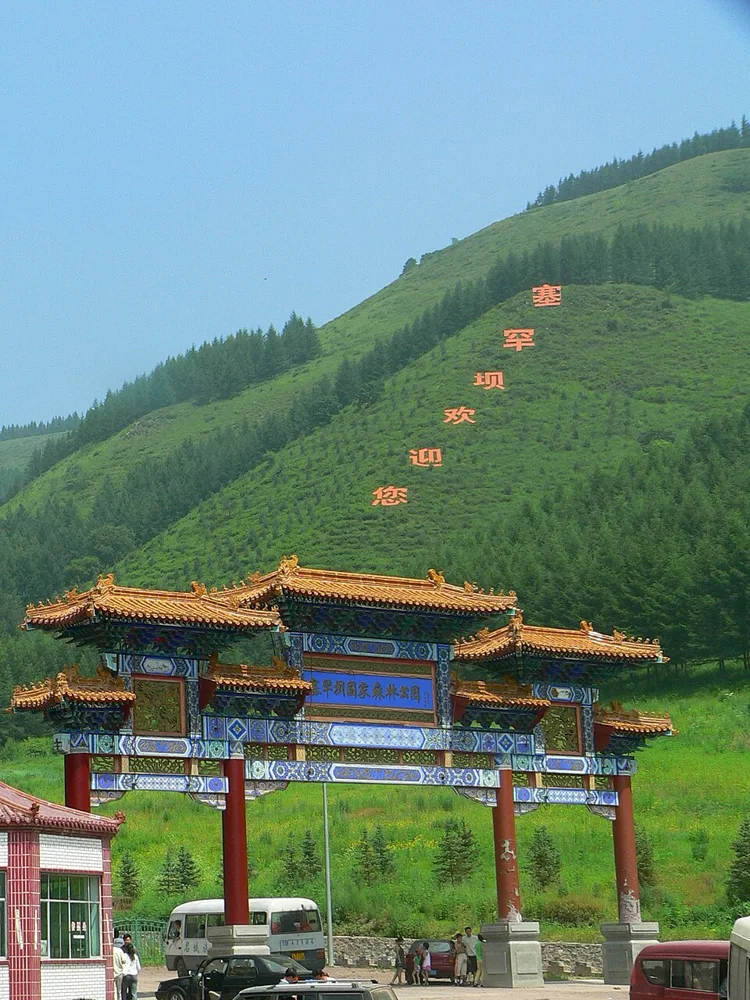
Mulan Weichang mainly consists of three major scenic areas: the Saihannba National Forest Park, the Imperial Road Grassland and Forest Scenic Area, and the Hongsongwa National Nature Reserve. The scenic area of Mulan Weichang features towering peaks and deep valleys, flat meadows, vast forests, numerous rivers, lush water and grass, and flowers blooming everywhere. It is acclaimed as “the source of rivers, the hometown of clouds, the world of flowers, and the ocean of forests,” and is also an important water source conservation area and ecological security barrier for Beijing, Tianjin, and Hebei.
Day 03 — Ulan Butong grassland viewpoints: Baicao Aobao, filming landscapes, Wucai Mountain and Princess Lake; optional arranged camping or sunset viewing.
Wulan Butong Scenic Area is located in the southwest of Keshikten Banner, Chifeng City, Inner Mongolia Autonomous Region. It was once part of the Qing Dynasty’s royal Mulan Weichang area. Wulan Butong, in Mongolian, means “red altar-shaped mountain” in Chinese, referring to the large and small Red Mountains, which are part of the Mulan Weichang. Planning note: Scenic-loop access and camping depend on seasonal notices and local land rules. Use permitted roads; a vehicle operator must confirm route, insurance, safety equipment and exclusions separately.
The scenic area’s geographical coordinates are from 116°43′ to 117°16′ east longitude and 42°23′ to 42°29′ north latitude. It is 120 kilometers away from the government town of Jingpeng in Keshikten Banner, and the distances to Beijing, Chengde, and Chifeng are 450, 260, and 300 kilometers respectively. It is adjacent to Hongshanzi Township in the east; borders Weichang in Hebei Province in the south; and is bordered by Duolun County in Xilingol League and Haolai Huore Township in Ke Banner in the west and north, with convenient transportation.
The natural tourism resources of Wulan Butong Scenic Area mainly include grasslands, lakes, deserts, wetlands, and forests, supplemented by trees, flowers, and wild animals, most of which are well preserved. Cultural tourism resources mainly feature Mongolian ethnic customs, ancient battlefield sites, and special tourism products, supplemented by Mongolian culture and special diets, making it a carrier for cultural tourism, folk tourism, religious tourism, and industrial sightseeing tourism. Costume dramas and modern TV dramas such as “My Fair Princess,” “Kangxi Dynasty,” and “Emperor Han Wu” have been filmed here.
Day 04 — Optional grassland family activity; return to Chengde, with the Mountain Resort on arrival only if time permits.
Chengde Mountain Resort (Chinese: 承德避暑山庄; Manchu: Halhūn be jailara gurung) is a large complex of imperial palaces and gardens situated in the Shuangqiao District of Chengde in northeastern Hebei province, northern China, about 225 kilometres (140 mi) northeast of China’s capital Beijing. This resort was frequently used as a summer palace during the Qing dynasty. Because of its vast and rich collection of Chinese landscapes and architecture, Chengde Mountain Resort in many ways is a culmination of all the variety of gardens, pagodas, temples and palaces from various regions of China. In 1994, The Mountain Resort was awarded World Heritage Site status. Planning note: A full grassland programme plus the drive to Chengde and the Mountain Resort is overpacked. Add a Chengde night and visit the resort the following day if necessary.
Chengde is one of China’s four famous gardens, national relic protection unit and Class 5A Tourist Attractions in China.
Day 5 — Simatai Great Wall & departure
Original itinerary heading
Day 05 — ☀️ Climb the Simatai Great Wall to see the world wonder 💗 Conclude the Chengde grassland trip 🚗 Return trip.
Simatai (Chinese: 司马台; pinyin: Sīmǎtái), a section of the Great Wall of China located in the north of Miyun District, 120 km northeast of the city center of Beijing, holds the access to Gubeikou, a strategic pass in the eastern part of the Great Wall. It was closed in June 2010 but has been reopened to tourists since 2014. Planning note: Simatai is a separate Beijing-area excursion, not a convenient final stop for every Chengde departure. Book its access and transport separately or omit it; do not risk an onward connection to fit it in.
The section was originally built during the Northern Qi dynasty (550–577) and rebuilt during the Hongwu Emperor’s reign during the Ming dynasty.
Simatai Great Wall is 5.4 km long with 35 beacon towers. This section of the Great Wall incorporated the different characteristics of each section of the Great Wall. A specialist on the Great Wall, Professor Luo Zhewen, has said that “The Great Wall is the best of the Chinese buildings, and Simatai is the best of the Great Wall.” UNESCO has designated Simatai Great Wall as one of the World Cultural Heritage Sites as part of the Great Wall World Heritage Site.
FAQs
1. Q: What activities can I do at Wulan Butong Scenic Area?
A: You can enjoy the natural scenery such as grasslands, lakes, and forests. There are also opportunities for cultural experiences like learning about Mongolian ethnic customs and visiting filming locations.
2. Q: What are the features of Mulan Weichang?
A: It features towering peaks, flat meadows, vast forests, and is an important water source conservation area.
3. Is it difficult to climb the Simatai Great Wall?
4. Q: What is Chengde Mountain Resort?
A: It is a large complex of imperial palaces and gardens in Chengde. It was frequently used as a summer palace during the Qing dynasty.
5. How much time should I allocate for visiting Chengde Mountain Resort?
6. Q: What entry permission does this route require?[3]
A: Hebei is listed, but Ulan Butong is in Inner Mongolia, which is not a permitted 240-hour transit area. For 240-hour transit, eligibility depends on your passport, designated port, confirmed onward travel to a third country or region, and the stay granted. Verify the current NIA rules before booking; otherwise use another valid entry/stay basis.[4]
Before you make arrangements
Check seasonal grassland roads, accommodation, visitor permissions and activity operators. Simatai booking/transport is not included in the core plan and must be checked separately.
Notes & sources
These notes support the specific corrections above. They do not mean that every sentence, future opening time or individual eligibility has been verified.
Correction notes and source scope
Remove unsupported sale/group-departure implication while preserving destination names and original duration.
Editorial correction; no new factual-verification date claimed.Clarify that unstructured time does not mean attraction admission or purchases are free.
Editorial correction; no new factual-verification date claimed.Replace obsolete 144-hour FAQ with current entry-permission question.
NIA — current visa-free transit policy and permitted-area tableSource checked 2026-10-31Remove blanket 144-hour entitlement and obsolete 2024 guide reference; apply current NIA conditions and route-specific geographical limits.
NIA — current visa-free transit policy and permitted-area tableSource checked 2026-10-31Preserve original activity range while removing fixed duration, private access, unlimited participation and guaranteed performances.
Editorial correction; no new factual-verification date claimed.Remove unverified agency affiliation, exclusive campsite, free guide, vehicle and food inclusions; retain original places/experiences.
Editorial correction; no new factual-verification date claimed.Remove promised show duration, unlimited grass sliding, guaranteed riding/fireworks. Original detailed marketing heading remains in history.
Editorial correction; no new factual-verification date claimed.Remove included half-day off-road/private-ranch/exclusive-camp promise; keep named scenic loop.
Editorial correction; no new factual-verification date claimed.Remove guaranteed close-contact animal/tractor/craft programme; keep original transfer and heritage destination.
Editorial correction; no new factual-verification date claimed.Keep original destination narrative; add specific pacing/access constraint for this day.
Editorial correction; no new factual-verification date claimed.Keep original destination narrative; add specific pacing/access constraint for this day.
Editorial correction; no new factual-verification date claimed.Keep original destination narrative; add specific pacing/access constraint for this day.
Editorial correction; no new factual-verification date claimed.Keep original destination narrative; add specific pacing/access constraint for this day.
Editorial correction; no new factual-verification date claimed.
- NIA — current visa-free transit policy and permitted-area table
31 route geographic-scope screenings; image table independently viewed locally. Reopened in this review.
Checked 2026-10-31 - UNESCO — Chengde Mountain Resort
Heritage/geographical context only. Evidence inherited from the 29 October audit; not a fresh operating-calendar check.
Checked 2026-10-29