
Lijiang + Dali + Shangri-La 6-Day 5-Night Route inspiration
Yunnan is a province in the southwestern part of China, known for its unique geographical location, diverse ethnic cultures, rich natural landscapes, and pleasant climate, making it a desirable travel destination for tourists.
- Natural Scenery: Yunnan boasts magnificent natural landscapes such as Jade Dragon Snow Mountain, Meili Snow Mountain, Lugu Lake, Erhai Lake, etc., offering a wealth of options for visitors who love natural scenery.
- Biodiversity: Known as the “Kingdom of Plants” and the “Kingdom of Animals,” Yunnan has a rich variety of plant species and a variety of wild animals, making it an ideal place for nature enthusiasts and eco-tourism.
- Ethnic Cultures: Yunnan is a region inhabited by multiple ethnic groups, with 25 ethnic minorities, each having their own unique culture and traditions, such as the Dongba culture of the Naxi people and the Torch Festival of the Yi people.
- Historical Relics: With a long history, Yunnan has many historical relics and cultural monuments, such as Dali Ancient Town, Lijiang Ancient Town, Stone Forest, etc., providing a place for history enthusiasts to explore.
- Climate: Yunnan’s weather changes sharply with elevation and region. Dali, Lijiang and Shangri-La do not share one year-round spring climate; pack for the actual forecast and cold mountain conditions.
- Cuisine: Yunnan’s cuisine is famous for its unique flavors and diverse ingredients, such as Crossing-the-Bridge Rice Noodles, Yunnan small-bean coffee, Pu’er tea, etc., attracting food lovers.
- Festivals and Activities: Yunnan’s ethnic groups have a variety of colorful festivals and activities, such as the Water-Splashing Festival of the Dai people and the March Street of the Bai people, providing tourists with opportunities to experience different ethnic cultures.
- Tea Horse Ancient Road: Yunnan is an important part of the ancient Tea Horse Road, a historically significant trade route connecting China with South Asian countries, with important historical and cultural value.
- Adventure Tourism: Yunnan’s diverse terrain and landforms are suitable for adventure activities such as hiking, mountaineering, and rafting.
Note:
- Yunnan is a gathering place for ethnic minorities, and it is essential to respect the local customs and cultures during your travels.
- The itinerary includes areas with high altitudes. Plan gradual ascent and rest; the original arrival-then-snow-mountain sequence is not a guaranteed safe acclimatisation schedule.[7]

Itinerary
Day 1 — Arrive in Lijiang
Full itinerary heading
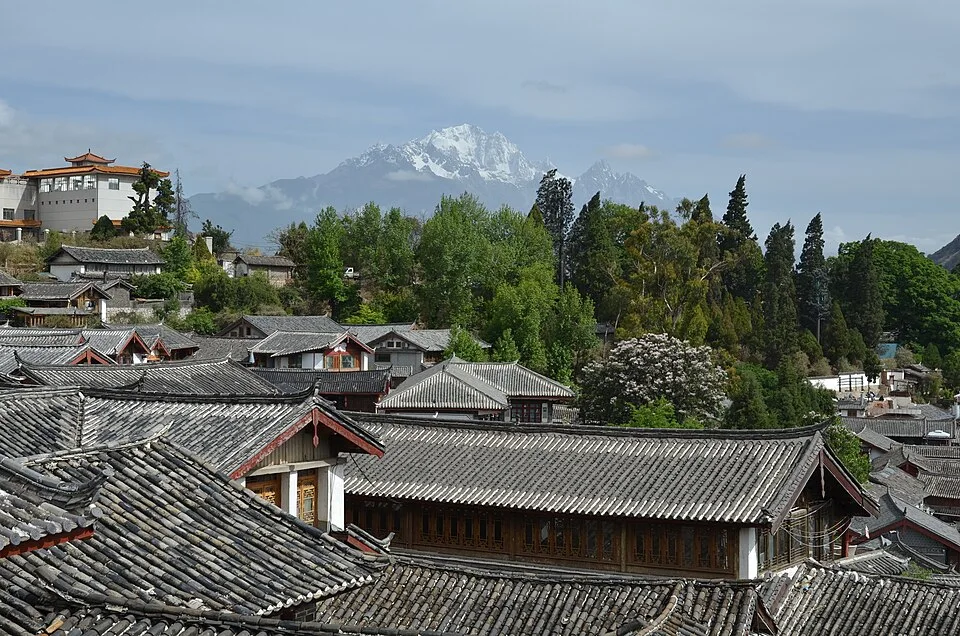
Day 1 — Departure Place - Lijiang: Full day of independent sightseeing options, gather to acclimate to the high-altitude environment (it is recommended to visit the Lijiang Ancient Town and the internet-famous Yichi Lane, Lijiang Ancient Town Bar Street, or climb up Lion Hill and Qianxue Tower to see the panoramic view of the ancient town).
Dayan (Chinese: 大研), commonly called the Old Town of Lijiang (simplified Chinese: 丽江古城; traditional Chinese: 麗江古城) is the historical center of Lijiang City, in Yunnan, China. It is a UNESCO World Heritage Site.
The Nakhi people learned Chinese classical music from the visitors from Nanjing during the Ming Dynasty and continue to play that music even to this day, long after the art died out in other parts of China. The old musicians have been organized for regular performances in Dayan Old Town and less regular performances in the outlying villages.
Circle dancing in costume is also a custom of the Tibetan people to the north of Lijiang and of the Bai people to the south. Previously there were substantial Tibetan and Bai settlements in Dayan Old Town but most of these people have been resettled to districts away from the tourist areas. Tibetan circle dancing can be seen occasionally in Dayan Old Town and more regularly in private gardens and Nongjiale (农家乐) gatherings of local Tibetans. Both Nakhi and Tibetan circle dancing are practiced outside of the town’s Tibetan temples Wenfeng Si (文峰寺) on Wenbifeng (文笔峰) Mountain, Zhiyun Si (指云寺) near Lashi Hai Lake (拉市海), and Fuguo Si (富国寺) on Jade Dragon Mountain (玉龙雪山), especially on temple festival days.
Greater Lijiang (including Dayan, and two villages to the north, called Baisha (白沙) and Shuhe (束河) respectively) was registered on the UNESCO World Heritage List on December 4, 1997. Since then, the local government has taken more responsibility for the development and protection of the old city. Lijiang’s tourism increased over the past twenty years, and travelers from around the world visit, though most tourists are still Han Chinese from other parts of China;
Day 2 — Yulong Snow Mountain & Blue Moon Valley
Original itinerary heading
Day 2 — 5A Scenic Area Yulong Snow Mountain (Glacier Park Cable Car) — Blue Moon Valley (Baishui River) — Impression Lijiang Performance.
Jade Dragon Snow Mountain (simplified Chinese: 玉龙雪山; traditional Chinese: 玉龍雪山; pinyin: Yùlóng Xuěshān; Naxi: Jingv’lv or Ngv’lv bbei jjuq) is a mountain massif or small mountain range in Yulong Naxi Autonomous County, Lijiang, in Yunnan province, China. Its highest peak is named Shanzidou or Shan-Tzu-tou (扇子陡) and it is 5,596 m (18,360 ft) above sea level. Planning note: The Glacier Park cableway reaches high altitude. Make the outing optional, confirm the exact ticket and weather operation, and do not ascend merely to complete the itinerary if you feel unwell. Blue Moon Valley and the performance need separate timing checks.[8]
The Chinese name, Yùlóng Xuěshān, translates directly as Jade Dragon Snow Mountain; it is sometimes translated as Mount Yulong or Yulong Snow Mountain. The mountain’s Naxi name is Mount Satseto.
Day 3 — Shuanglang, Haishe Park & Li Xiang Bang
Original itinerary heading
Day 3 — The charm of Cang'er is at Shuanglang Ancient Town — Haishe Ecological Park for an in-depth experience of "coastal cycling—seaside travel photography—280° sea view afternoon tea" — China's "Santorini" Li Xiang Bang.
Dali City (in Bai language: Dallit sil) is a county-level city in the Dali Bai Autonomous Prefecture of Yunnan Province, People’s Republic of China, and also the capital of the Dali Prefecture. It is located in the western part of Yunnan Province, on the Yunnan-Guizhou Plateau, at the foot of Cangshan Mountain, and on the shores of Erhai Lake. The city covers an area of 1,739 square kilometers, with a total population of 771,100 in 2020, and the People’s Government is located in Haidong Town. Planning note: This is also the move from Lijiang toward Dali. Choose one part of Erhai rather than promise the entire lakeside list; “sea” in the original description refers to a lake, not the coast.
Dali City is a national historical and cultural city, an excellent tourist city in China, a national garden city, and a national all-for-one tourism demonstration zone. In ancient times, it was the capital of the Nanzhao Kingdom and the Dali Kingdom, and it is one of the earlier developed regions in Yunnan Province, having served as the political, economic, and cultural center of the Yunnan region for more than five hundred years.
Day 4 — Dali Ancient Town & Hutiao Gorge
Original itinerary heading
Day 4 — The ancient capital of the Nanzhao Kingdom and the Dali Kingdom [Dali Ancient Town] — Highly praised by National Geographic] the [Hutiao Gorge] — Enjoy a high-standard Tibetan meal with the [Zangwang Tusi Song and Dance Feast].
Tiger Leaping Gorge (Chinese: 虎跳峡; pinyin: Hǔ tiào xiá) is a scenic canyon on the Jinsha River, a primary tributary of the upper Yangtze River. It is located 60 kilometres (37 mi) north of Lijiang City, Yunnan in southwestern China. It is part of the Three Parallel Rivers of Yunnan Protected Areas World Heritage Site. Planning note: Dali to Tiger Leaping Gorge and onward toward Shangri-La is a long northbound journey. Add a travel night or reduce stops. The gorge viewpoint is not the same as completing the multi-day hiking trail; no banquet is included.
Legend says the name comes from a hunted tiger escaping by jumping across the river at the narrowest point (still 25 metres (82 ft) wide), using the rock in the middle.
At a maximum depth of approximately 3,790 meters (12,430 feet) from river to mountain peak, Tiger Leaping Gorge is one of the deepest and most spectacular river canyons in the world. The inhabitants of the gorge are primarily the indigenous Nakhi people, who live in a handful of small hamlets. Their primary subsistence comes from grain production and nowadays hiking tourism.
Day 5 — Duokuzong, Pudacuo National Park & Lijiang
Original itinerary heading
Day 5 — Explore the Shangri-La": Moonlight City [Duokuzong Ancient Town] — Experience the national intangible cultural heritage of [Thangka] painting — Visit the 5A scenic area [Pudacuo National Park] — Seasonal flower appreciation at [Xiao Zhongdian] — Return to Lijiang.
The name Shangri-La comes from a fictional place in Tibet’s Kunlun Mountains, described in the 1933 novel Lost Horizon by English author James Hilton. Hilton portrays Shangri-La as a mystical, harmonious valley, gently guided from a lamasery, enclosed in the western end of the Kunlun Mountains. Shangri-La has become synonymous with any earthly paradise, particularly a mythical Himalayan utopia – an enduringly happy land, isolated from the world. In the novel, the people who live in Shangri-La are almost immortal, living hundreds of years beyond the normal lifespan and only very slowly aging in appearance. Planning note: Dukezong, a painting activity, Pudacuo and the return to Lijiang are too many substantial activities for an unhurried day. Choose the old town or park and add an overnight stay if necessary. Flowers and workshops depend on season and availability. The itinerary’s destination is the real city of Shangri-La in Diqing, Yunnan, not a location in the novel.
Ancient Tibetan scriptures mention the existence of seven such places as Nghe-Beyul Khembalung. Khembalung is one of several Utopia beyuls (hidden lands similar to Shangri-La) which Tibetan Buddhists believe that Padmasambhava established in the 9th century CE as idyllic, sacred places of refuge for Buddhists during times of strife.
Day 6 — Heilongtan Park, Lashihai & departure
Original itinerary heading
Day 6 — Heilongtan Park - Lashihai Fishing Village - Return Trip
Lashihai (also known as Lashanghai, transliterated from the Naxi language, originally meaning “Tiger Sea”) is the core part of the Lashihai Plateau Wetland Provincial Nature Reserve in Lijiang, Yunnan. It is located in the central part of Lashi Basin, 8 kilometers west of Lijiang City, on the southeast slope of Jade Dragon Snow Mountain. “Lashi” is an ancient Naxi transliteration, where “La” means a barren plain and “Shi” means new, signifying a new barren plain. Lashihai is a famous gathering place for migratory birds, with about 20,000 migratory birds spending the winter here each year.
FAQs
1. Q: What kind of clothing should I bring when visiting Jade Dragon Snow Mountain?
2.Q: What is Shangri-La?
A: The name comes from James Hilton’s Lost Horizon, but this route visits the real city of Shangri-La in Diqing, Yunnan. The literary paradise is not a geographical description of the city.
3. Q: Are there any local handicrafts unique to Lijiang that make good souvenirs?
A: Yes, you can find items like Naxi embroidery, Dongba wood carvings, and traditional musical instruments. These handicrafts are not only beautiful but also carry the cultural essence of Lijiang.
4. Q: What is the legend behind Tiger Leaping Gorge?
A: Legend says the name comes from a hunted tiger escaping by jumping across the river at the narrowest point.
5. Q: What are the must-try local activities in Dali?
A: Consider cycling on permitted lakeside routes around Erhai; check local vehicle restrictions and rental/safety terms rather than assuming electric scooters are allowed everywhere. Visiting the ancient towns of Dali and experiencing traditional Bai ethnic group handicrafts like tie-dyeing are also highly recommended.
6. Q: What entry permission does this route require?[3]
A: Dali and Lijiang are listed, but Shangri-La/Diqing is not: this full route is not covered by a Lijiang transit stay. For 240-hour transit, eligibility depends on your passport, designated port, confirmed onward travel to a third country or region, and the stay granted. Verify the current NIA rules before booking; otherwise use another valid entry/stay basis.[4]
Before you make arrangements
Confirm Yulong cableway/park products, Tiger Leaping Gorge trail status, Pudacuo operations and intercity transport. No specific altitude sequence is certified as safe for an individual.
Notes & sources
These notes support the specific corrections above. They do not mean that every sentence, future opening time or individual eligibility has been verified.
Correction notes and source scope
Remove unsupported sale/group-departure implication while preserving destination names and original duration.
Editorial correction; no new factual-verification date claimed.Clarify that unstructured time does not mean attraction admission or purchases are free.
Editorial correction; no new factual-verification date claimed.Replace obsolete 144-hour FAQ with current entry-permission question.
NIA — current visa-free transit policy and permitted-area tableSource checked 2026-10-31Remove blanket 144-hour entitlement and obsolete 2024 guide reference; apply current NIA conditions and route-specific geographical limits.
NIA — current visa-free transit policy and permitted-area tableSource checked 2026-10-31Remove unsupported global biodiversity ranking.
Editorial correction; no new factual-verification date claimed.Correct province-wide year-round mild-weather claim.
Editorial correction; no new factual-verification date claimed.Add specific altitude sequencing limitation.
CDC Yellow Book 2026 — high-altitude travelSource checked 2026-10-31Keep original destination narrative; add specific pacing/access constraint for this day.
CDC Yellow Book 2026 — high-altitude travelSource checked 2026-10-31Keep original destination narrative; add specific pacing/access constraint for this day.
Editorial correction; no new factual-verification date claimed.Keep original destination narrative; add specific pacing/access constraint for this day.
Editorial correction; no new factual-verification date claimed.Correct geographical ambiguity between fictional place and visited city.
Editorial correction; no new factual-verification date claimed.Correct repeated confusion in FAQ.
Editorial correction; no new factual-verification date claimed.Remove unrestricted electric-scooter advice.
Editorial correction; no new factual-verification date claimed.
- NIA — current visa-free transit policy and permitted-area table
31 route geographic-scope screenings; image table independently viewed locally. Reopened in this review.
Checked 2026-10-31 - UNESCO — Old Town of Lijiang
Historic town context only. Evidence inherited from the 29 October audit; not a fresh operating-calendar check.
Checked 2026-10-29 - CDC Yellow Book 2026 — high-altitude travel
Gradual ascent, acclimatization and individual medical planning; no herbal preventive recommendation. Reopened in this review.
Checked 2026-10-31